
Synonyms
Clavaria aurea Schaeff.
Corallium aurea (Schaeffer per Fries)
Common name
Golden coral
Golden clavaria
Goldgelbe Koralle (German)
Kuřátka zlatá (Czech)
Description
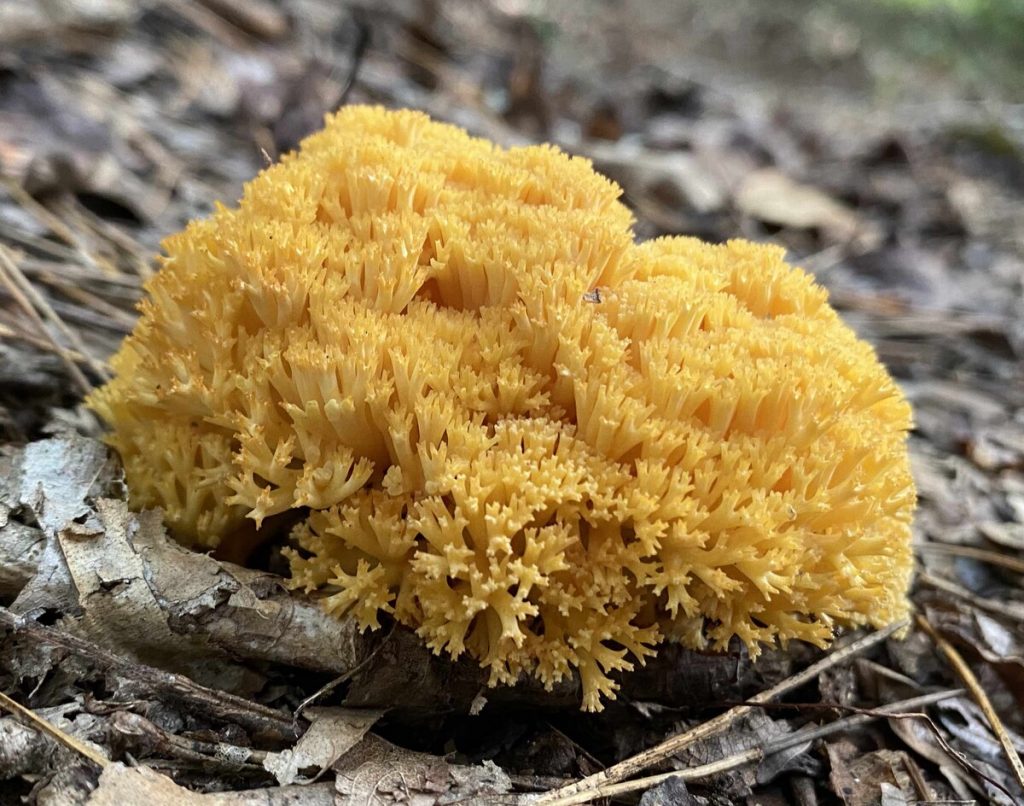
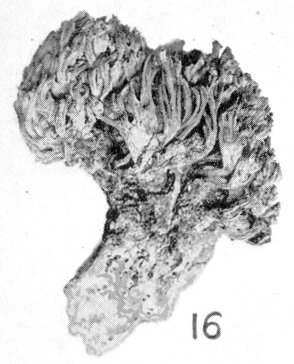
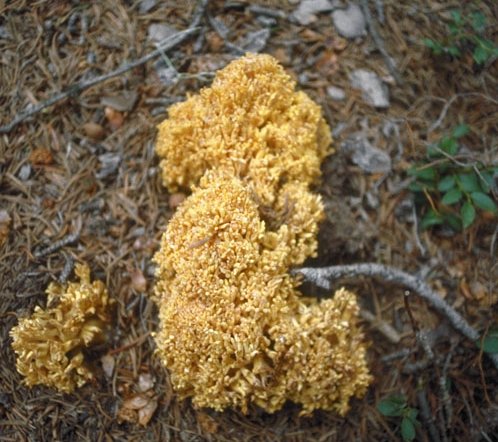
Fruit bodies: up to 10 cm high, up to 7 cm wide, repeatedly branched; yellow or ochraceous.
Stem: single to fasciculate, stout, smooth, elastic, white or near-white, usually with more than one fruit body formed from a single point. Major branches numerous, concolorous to stipe
Spores: sub-cylindrical, rough in outline 8-15 x 3-6 µm.
Spore deposit: ochreaceous.
Habitat: grows on the ground in mixed woods.
Edibility: avoid-causes gastrointestinal disturbances in some individuals.
This species is similar in appearance to several of the other Ramaria, and usually examination of microscopic characteristics is required for absolute identification. See Petersens’ paper (1974) for a detailed description of microscopic features.
Anti-tumor properties
Polysaccharides extracted from the mycelial culture of R. aurea and administered intraperitoneally into white mice at a dosage of 300 mg/kg inhibited the growth of Sarcoma 180 and Ehrlich solid cancers by 60% (Ohtsuka et al., 1973).
My name is Austin Collins.
I've dedicated my life to Mushrooms.
I believe Mushrooms are the best kept secret when it comes to health and well being.
For that reason, I would like to share a company with you that in my opinion makes the best mushroom products on the market.
The company is called Noomadic Herbals, my favorite supplement they make is called "Mushroom Total".
I take their products every day and they have helped me think better and have more energy. Give them a try.
-Austin
Web
George Barron’s fungi website has a page on the golden coral.
References
Burt EA.
The North American species of Clavaria with illustrations of the type specimens.
Annals of the Missouri Botanical Garden. 1922 9(1):1-78.
Ohtsuka S, Ueno S, Yoshikumi C, Hirose F, Ohmura Y, Wada T, Fujii T, Takahashi E.
Polysaccharides having an anticarcinogenic effect and a method of producing them from species of Basidiomycetes.
UK Patent 1331513, 26 September 1973.
Petersen RH.
Contribution toward a monograph of Ramaria. I. Some classic species redescribed.
Am J Bot. 1974 61(7):739-748.
Razaq A, Shahzad S.
Ramaria aurea, a new record from Pakistan.
Pakistan J Bot. 2005 37(2):493-4.
The top picture looks like Calocera viscosa (Yellow stagshorn) rather than a coral fungus. It doesnt look sufficiently brached.
Thanks Rob! You’re right. I’ve fixed it!